Chiropractic Tables


Australian-Made Chiropractic Tables Built for Clinical Practice
A chiropractic table is one of the most used pieces of equipment in your clinic. It supports every adjustment, every patient, every working day. Choosing the wrong one costs you in comfort, efficiency, and longevity. Choosing the right one pays for itself over years of reliable daily use.ABCO Health Care has been designing and manufacturing chiropractic tables in Australia for over 40 years. Our range is built for the full scope of chiropractic practice, from diversified and Thompson technique to activator, and drop-assisted adjusting. Every table is constructed to commercial-grade standards, backed by a 5-year warranty, and supported by a local team with parts and service available in Australia.
Imported tables may carry a lower upfront price. But when a component fails mid-schedule, the cost of downtime, international shipping delays, and lost patient appointments quickly outweighs any initial saving. With ABCO, you are not just buying a table. You are buying reliability you can bill against.
Prices include GST
8 products
What to Look for in a Chiropractic Table
The right chiropractic table depends on the techniques you practice, the patient population you treat, and how your clinic workflow is structured. Here is what to weigh up before you buy.Table Type: Drop, Elevation, Hylo, and Stationary
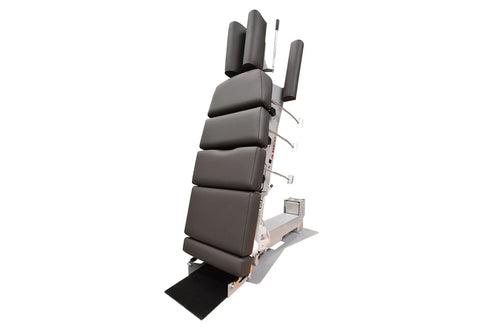
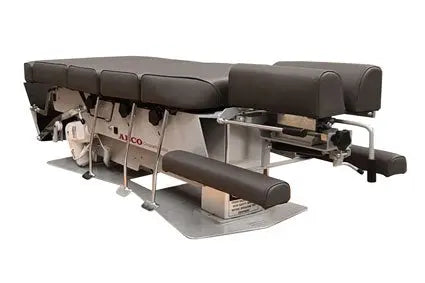
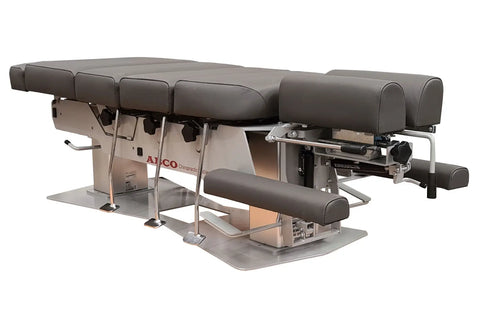
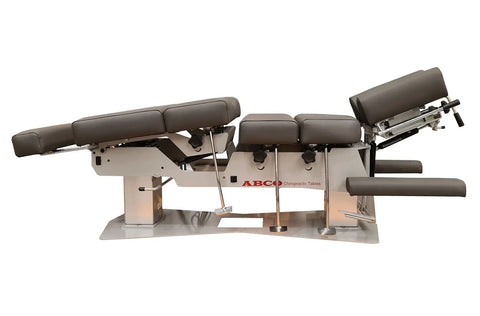
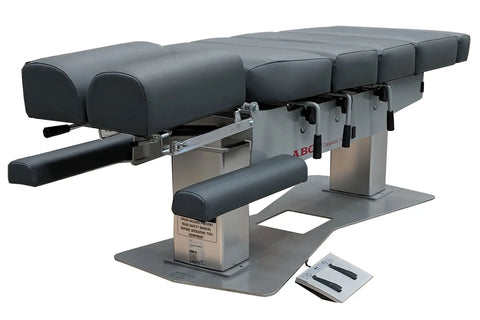
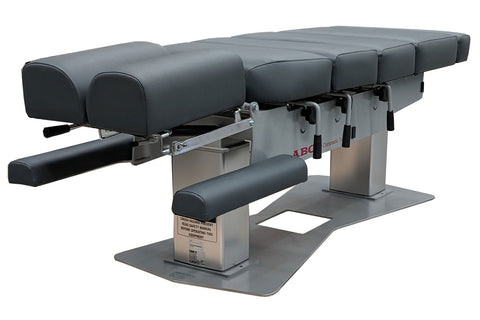
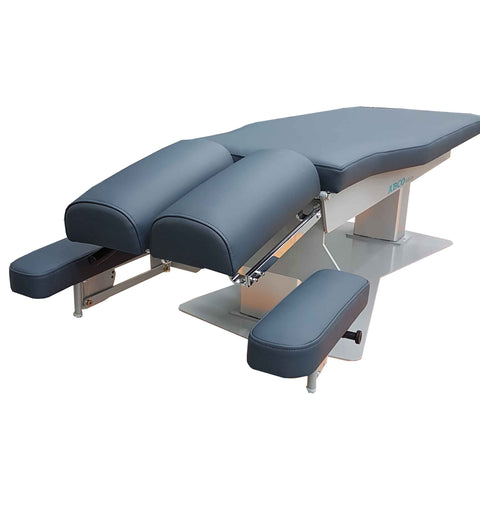
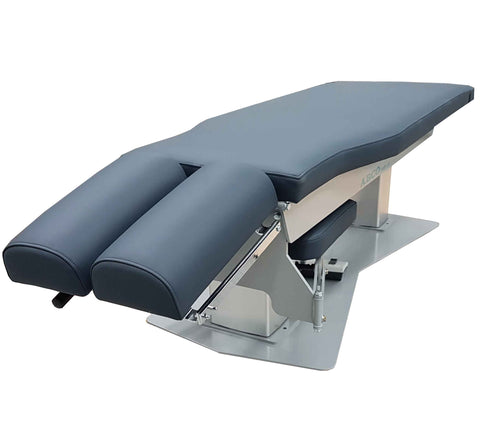
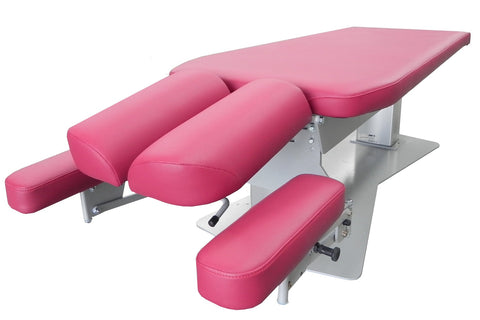
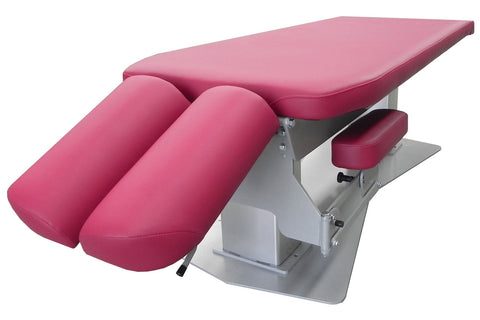
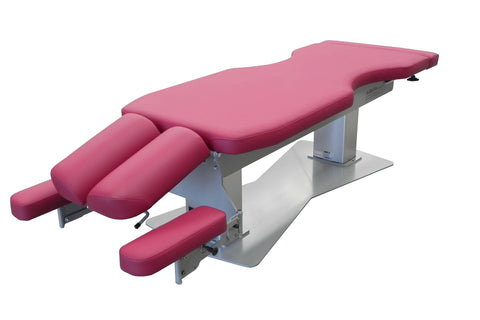
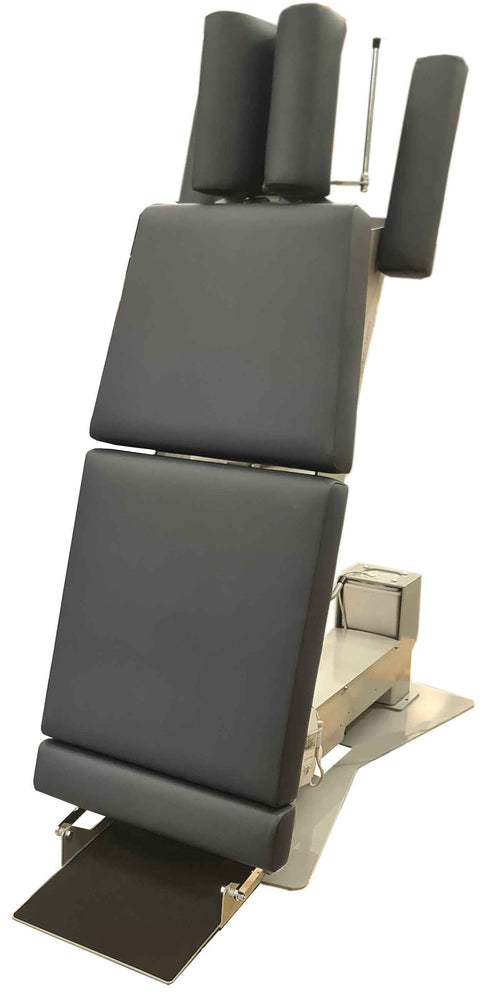
Drop tables, also called Thompson drop tables, feature segmented sections, typically cervical, lumbar, dorsal, and pelvic, that are cocked to a raised position and released under the practitioner's thrust. The controlled drop adds momentum to the adjustment, allowing for a lower-force technique that many patients find more comfortable than high-velocity manipulation. They are the standard choice for practitioners using Thompson Technique, Diversified Technique, and other drop-assisted methods.Hylo tables, sometimes called hi-lo tables, allow the patient to step onto the table in a near-vertical position and be lowered to horizontal for treatment. They also have elevation feature for height adjustment. This is a significant clinical advantage for patients with mobility limitations, post-surgical presentations, or acute pain that makes stepping up onto a standard table difficult. For any chiropractor treating an older demographic or high proportion of injury-related presentations, an elevation table reduces patient strain and practitioner manual handling risk.
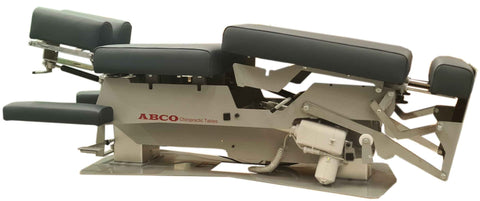
Elevation tables combine drop functionality with elevation capability. The table raises and lowers horizontally for patient entry and treatment and features integrated drop sections for adjustment. They carry a higher price point but offer the broadest clinical versatility, particularly in mixed-technique practices or clinics where patient mobility varies significantly.
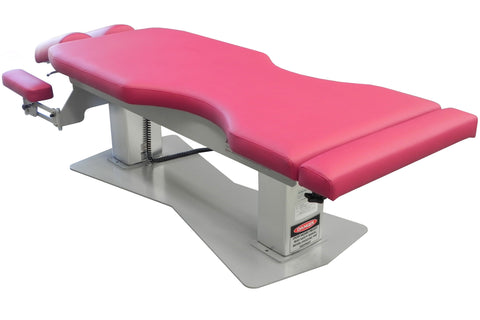
Stationary tables offer a fixed-height platform rather than electrically adjustable elevation. They are available with drop sections and suit practitioners whose workflow does not require height adjustment, or where clinic space is a consideration.
Browse our range of chiropractic accessories to complement your table setup with compatible equipment.
Activator Technique
Practitioners using the Activator Method require a different setup entirely. The Activator Adjusting Instrument is used in a prone position along the spine, which demands a flat, firm, and correctly dimensioned surface rather than the segmented drop sections of a standard chiropractic table. Our dedicated activator tables are designed specifically for this technique, with the surface dimensions and construction suited to Activator protocol.Weight Capacity and Ergonomic Workflow
A table used thirty to fifty times per day across a five-day week accumulates significant mechanical load. Maximum lifting capacity is a hard specification: if a table is rated to 180kg and your patient base regularly includes presentations above that threshold, you need a table rated accordingly. Do not assume a higher-priced table has a higher weight capacity without confirming the specification.Ergonomic workflow is a less visible but equally important consideration. Adjustable height ranges affect how much the practitioner needs to bend or reach across a session. Over years of clinical practice, a table that does not suit your body mechanics contributes to practitioner fatigue and injury. Consider the height range, headpiece adjustability, and arm board configuration relative to your own height and typical patient volume.
Upholstery Width and Patient Comfort
Upholstery width affects patient comfort, particularly for broader patients or those requiring lateral positioning. A narrower table may be appropriate for a compact clinic room but can limit treatment options for certain patient presentations. Consider the range of body types you commonly treat when comparing specifications across models.Australian Manufacturing and Long-Term Support
ABCO tables are manufactured in Australia, which means parts availability, warranty claims, and service calls are handled locally. For a piece of equipment central to your daily revenue, local support is not a minor consideration. An imported table with a 12-month warranty and a 6-to-8 week international shipping lead time for replacement components represents a material business risk that an Australian-made table with a 5-year warranty and local service does not.Frequently asked questions
What is a chiropractic drop table?
A chiropractic drop table is an adjusting table fitted with independently adjustable drop sections, typically cervical, lumbar, dorsal, and pelvic, each of which can be cocked to a slightly raised position before the adjustment. When the practitioner applies a thrust, the section releases and drops a short distance before stopping, adding controlled momentum to the technique. This is the mechanical principle behind the Thompson Technique, developed by Dr. J. Clay Thompson, and is also used in a number of other drop-assisted adjusting protocols. Drop tables allow practitioners to deliver specific spinal adjustments with lower applied force, which is particularly relevant for patients who are sensitive to high-velocity manipulation or who have presentations where gentler input is clinically preferred.
Why do chiropractic tables drop?
The drop mechanism exists to assist joint mobilisation through momentum rather than force alone. When a drop section is cocked and released under the practitioner's thrust, the brief downward movement creates a controlled impulse that facilitates vertebral movement with less manual force than a standard high-velocity low-amplitude adjustment. The audible sound associated with a drop table, often described as a pop or click, is the drop section reaching the end of its travel and stopping, not the joint cavitating. The two sounds can occur together, but the table mechanism and the joint response are separate events.
Are chiropractic drop tables safe?
Yes. Chiropractic drop tables are purpose-designed clinical equipment manufactured to defined mechanical specifications. The drop force on each section is fully adjustable from either side of the table, and the mechanism cannot activate unintentionally during patient positioning. In clinical use, drop-assisted technique is widely used across chiropractic, osteopathic, and some physiotherapy settings. ABCO tables are manufactured in Australia and undergo quality testing before dispatch. The 5-year warranty covers mechanical components including the drop sections, reflecting confidence in the long-term reliability of the mechanism under daily clinical use.
Do chiropractic drop tables work?
Drop-assisted adjusting has been used in chiropractic practice for decades and forms the basis of the Thompson Technique, one of the most widely taught adjusting methods in chiropractic education. The mechanical principle, applying a controlled impulse through a dropping table segment to facilitate vertebral movement, is well established in clinical practice. For practitioners trained in Thompson or other drop-assisted protocols, the table is not an optional accessory but a required piece of clinical equipment. Patient experience is also relevant: many patients who find high-velocity manual adjustment uncomfortable report that drop-assisted technique feels lighter and more predictable, which can improve compliance and treatment outcomes over time.
Which ABCO chiropractic table is right for my practice?
The best starting point is your primary adjusting technique and your typical patient population. If you practise Thompson Technique or any drop-assisted method, you need a table with functioning drop sections. If your patient base includes presentations with limited mobility, post-surgical recovery, or acute presentations where standing and lowering to horizontal is clinically preferable, an elevation or hylo table significantly improves the patient experience and reduces manual handling demands on the practitioner. If you use the Activator Method as your primary technique, neither a standard drop nor elevation table is the right fit and you should review our activator table range. If you have a mixed-technique practice and see a broad patient demographic, a hylo table with integrated drops offers the most clinical flexibility, at a higher price point that most busy practices recover quickly through improved appointment efficiency. Contact our team to discuss your setup and we can help you narrow it down.

![The essential Guide to picking your Pilates Reformer [2025]](http://abcohc.com.au/cdn/shop/articles/abco-pilates-guide.webp?v=1742176339&width=480)